Finding freedom
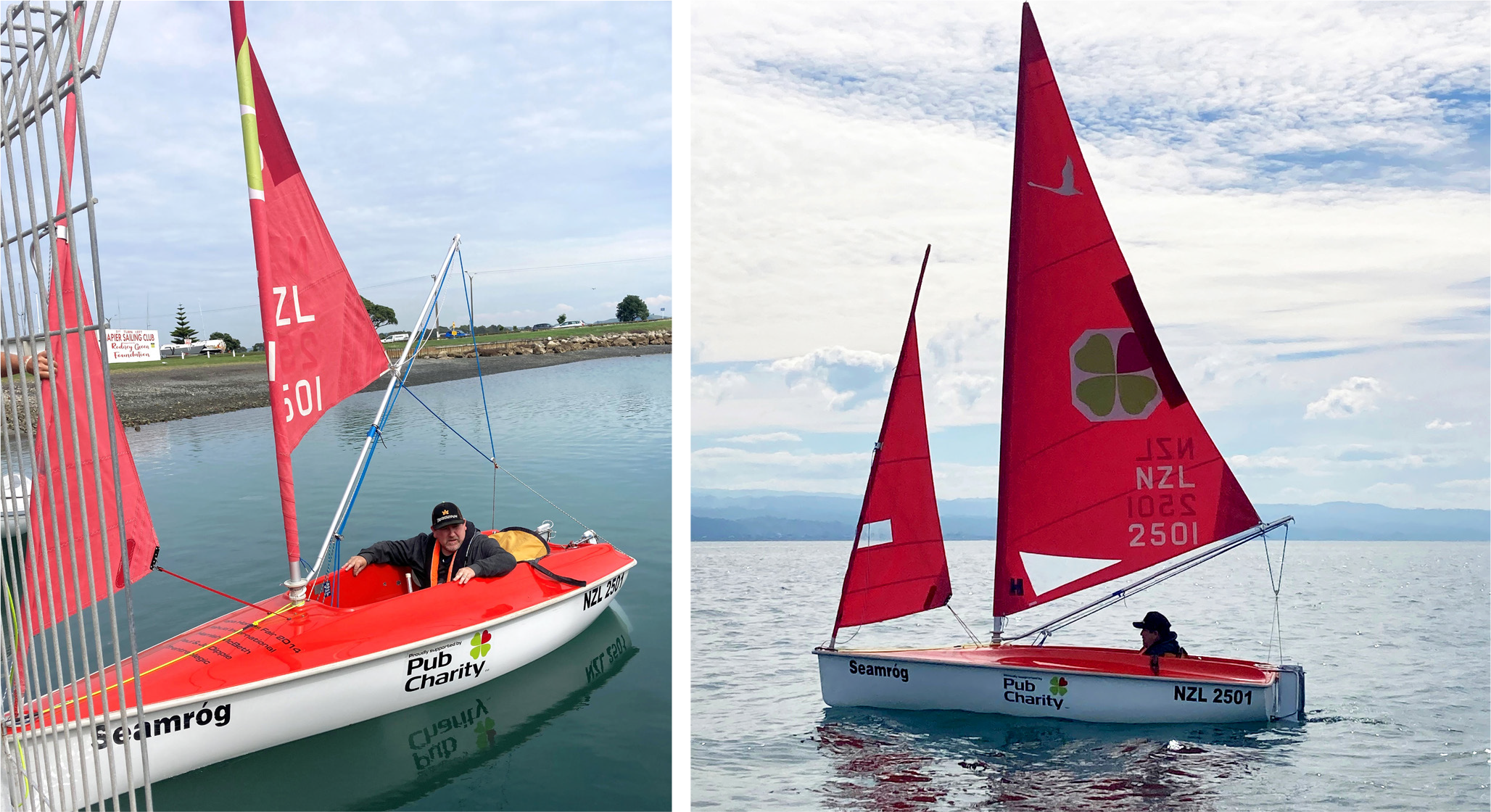
Allan enjoying his time out on the water with Sailability.
Through family, friendship and resilience, Allan continues to navigate life with Becker Muscular Dystrophy.
After a life-changing fall left him unable to walk, Allan had a choice: retreat from the world or find a new way forward. He chose to keep moving.
At the age of three, Allan underwent a muscle biopsy that indicated Becker Muscular Dystrophy (BMD). A definitive diagnosis was later confirmed through DNA testing when he was 10 years old. Around the same time as Allan's initial diagnosis, his mother was also diagnosed as a manifesting carrier of BMD, a relatively rare occurrence.
Growing up, Allan quickly learned that life would look a little different for him. As a young child, he took longer to learn to walk, and throughout school he faced ongoing fatigue and muscle weakness. Despite these challenges, he remained determined to be involved.
“I played hockey in primary school,” Allan recalls. “By high school, sport became more difficult, so I took up ten-pin bowling instead.”
A passionate sports fan, Allan remains a devoted supporter of the Warriors and enjoys following their season closely plus is a huge supporter of his nephew, Corbin Strong, who is a professional road racing cyclist.
One thing Allan has learned throughout his life is that living with a progressive condition means constantly adapting. As muscle strength changes, so too must the way he approaches everyday activities. Yet while BMD has shaped many aspects of Allan's life, he is quick to credit the people around him for helping him face those challenges. Family, he says, is everything.
Allan and his wife Charlotte are parents to three children – a 14-year-old daughter and 12-year-old identical twin boys. Their family life is busy, active and full of love.
“When my daughter was younger, I could still get down on the floor and play with her,” Allan says. “By the time the twins came along, things had become much harder.”
For most of his life, Allan was careful to avoid serious injury, knowing the potential consequences that a broken bone could have for someone living with muscular dystrophy.
Three years ago, his fears became reality. While at home, Allan's leg suddenly gave way beneath him. He fell heavily, breaking his femur. The injury resulted in three months in hospital and marked a significant turning point in his life. When he eventually returned home, Allan was no longer able to walk. The physical challenges were immense, but the emotional impact was equally difficult.
“I don’t know how I would have got through those three months without my family,” he says. “Their visits were the highlight of every day.”
His mother, who understood firsthand what it was like to live with muscular dystrophy, was an especially important source of support. Before the accident, Allan admits he had spent much of his life trying to hide his condition.
“I didn't really accept it. I just wanted to be like everyone else.”
Returning home after hospital was one of the toughest periods he has faced. Alone during the day, his initial instinct was to withdraw from the world and isolate himself. But gradually, his perspective began to shift. He started questioning whether shutting himself away was helping anyone, including himself. Instead, he began making small changes. Taking his scooter up to the local shops. Stopping to chat with people. Finding reasons to get out of the house and reconnect with his community. Those small steps made a big difference.
Today, Allan believes strongly in finding things to look forward to and keeping busy.
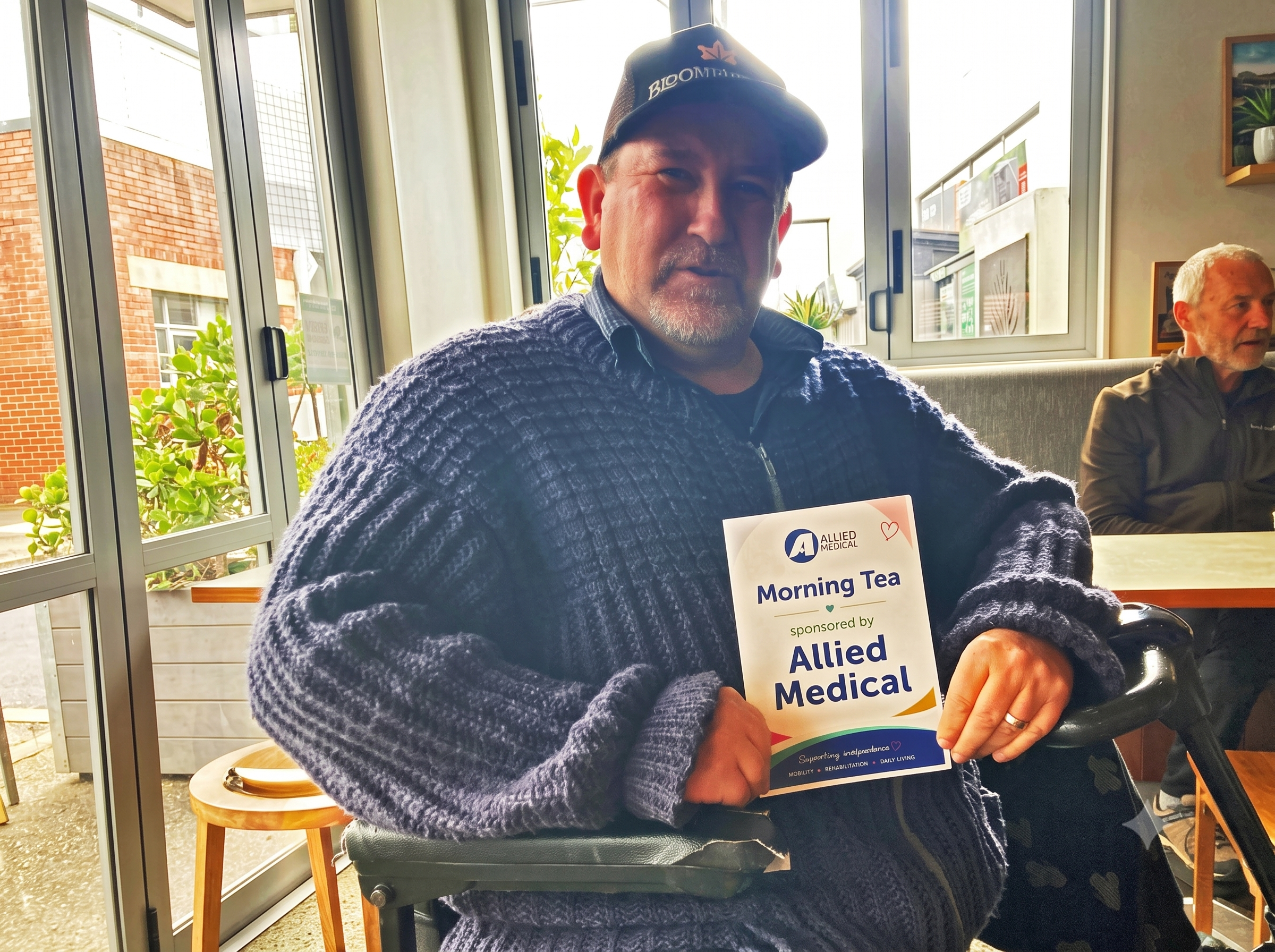
Allan at a local coffee group gathering.
Perhaps the most powerful message they share is around perception and identity. Too often, assumptions are made about people who use wheelchairs. Assumptions they are passionate about challenging.
“We are exactly the same as anyone else – we just use a wheelchair as our way of living an independent life. That’s all the wheelchair is to us. It doesn’t define who we are.”
Their advice to others living with a similar condition is simple but powerful: enjoy life, don’t let other people’s perceptions hold you back, and encourage conversation and understanding.
“People are always going to stare and wonder. We’d rather people come and have a conversation with us. A lot of people think they know a lot, but after ten minutes of getting to know us, they leave with a whole new understanding. Of us, and maybe of the condition too.”