Living an independent life on their own terms
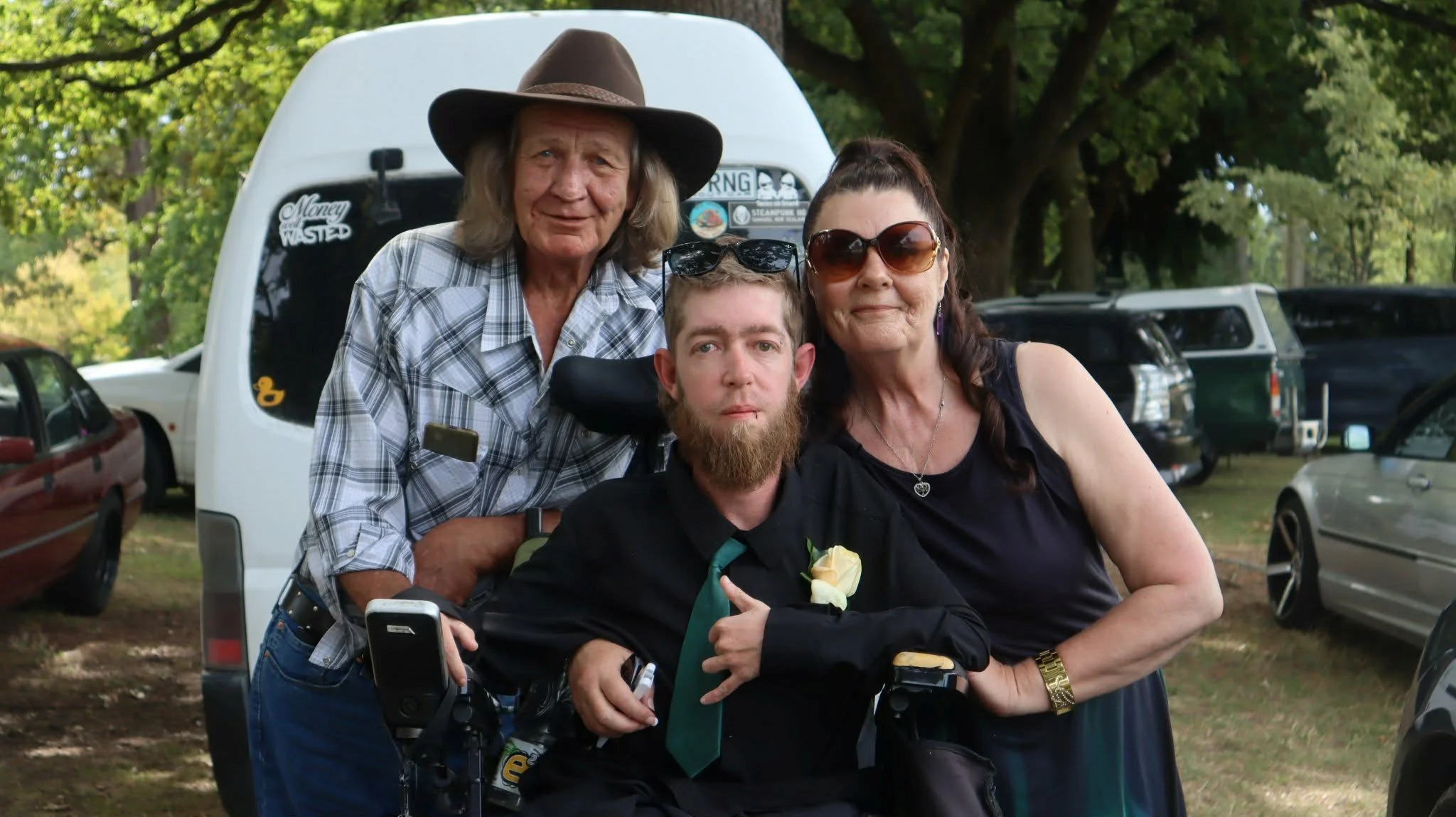
Stephen on his wedding day with his parents, Donna and Martin.
More than a diagnosis. A story of independence, resilience, friendship, and finding freedom through adaptability.
After waiting nearly 18 years for a diagnosis of Congenital Myopathy, brothers Stephen and Neil Tranter have built lives centred around independence, resilience, and making the most of every day.
For many people living with a neuromuscular condition, the journey to diagnosis can be long and uncertain. For Stephen and Neil Tranter, living with Congenital Myopathy, that journey took nearly 18 years.
“Both of us were born with our condition, but it took around 18 years to receive an official diagnosis of Congenital Myopathy,” they explain. “There were multiple tests and appointments over the years before we finally had answers.”
Today, they approach life with resilience, humour, and a determination to live as independently as possible. While everyday tasks can sometimes be challenging due to limited strength and being wheelchair users, they focus on adapting rather than giving up.
“Every day can be a bit of a mission, but we just take things as they come and make the best of every day. We adapt how we do things so we can achieve the independent lifestyle we have.”
That independent lifestyle is something they are proud of. They live in their own home, manage bills, cook, and keep themselves busy with a range of interests and activities.
“Our days are normally pretty busy. When the weather permits, we like getting out and about and living life to the fullest. Other days are spent in the garage working on our project car – a 1977 Escort Estate that we’ve been restoring for the last three years with the help of friends.”
Weekly catch-ups with mates and trips to the rugby are also important parts of life, reinforcing the value of friendships, connection, and community.
Over the years, they have also stayed connected with the Muscular Dystrophy Association of New Zealand. As children, they attended MDA camps and have since supported the organisation through fundraising efforts.
“MDA has always been there if there are things we need support with.”
Reflecting on their experiences navigating the health system, they acknowledge the frustrations that can come with a long diagnostic process, but emphasise the importance of finding healthcare professionals who listen.
“We all know our own health, and our point is to be listened to. Finding the right doctor who understands how things can change is really important.”
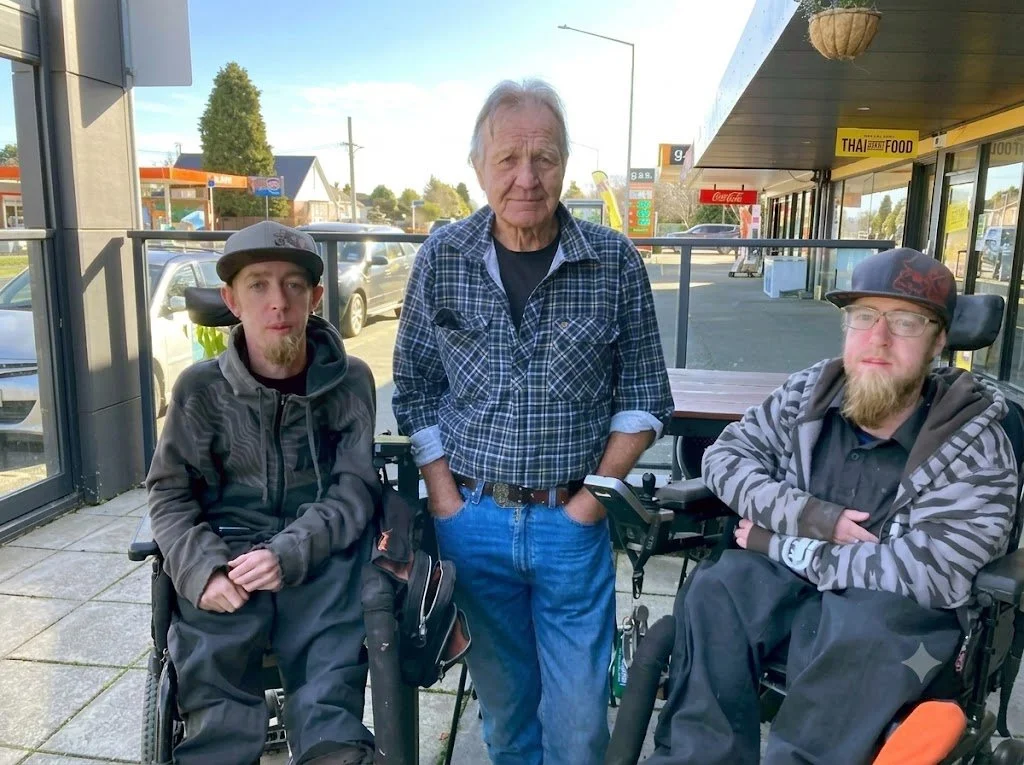
Stephen and Neil out to lunch with Dad, Martin.
Perhaps the most powerful message they share is around perception and identity. Too often, assumptions are made about people who use wheelchairs. Assumptions they are passionate about challenging.
“We are exactly the same as anyone else – we just use a wheelchair as our way of living an independent life. That’s all the wheelchair is to us. It doesn’t define who we are.”
Their advice to others living with a similar condition is simple but powerful: enjoy life, don’t let other people’s perceptions hold you back, and encourage conversation and understanding.
“People are always going to stare and wonder. We’d rather people come and have a conversation with us. A lot of people think they know a lot, but after ten minutes of getting to know us, they leave with a whole new understanding. Of us, and maybe of the condition too.”