Finding better ways to treat Duchenne muscular dystrophy

Read about the latest research from the Neurology of Myopathies (NoM) Lab in the Department of Medicine at the University of Otago – lab head, Associate Professor Angus Lindsay.
Supported by the Neurological Foundation and the Neuromuscular Research Foundation Trust.
Duchenne muscular dystrophy (DMD) is a genetic condition that causes progressive muscle weakness. Over time, muscles become damaged and lose strength. This affects movement, breathing, and heart function. Current treatments aim to slow this process, but they often have side effects.
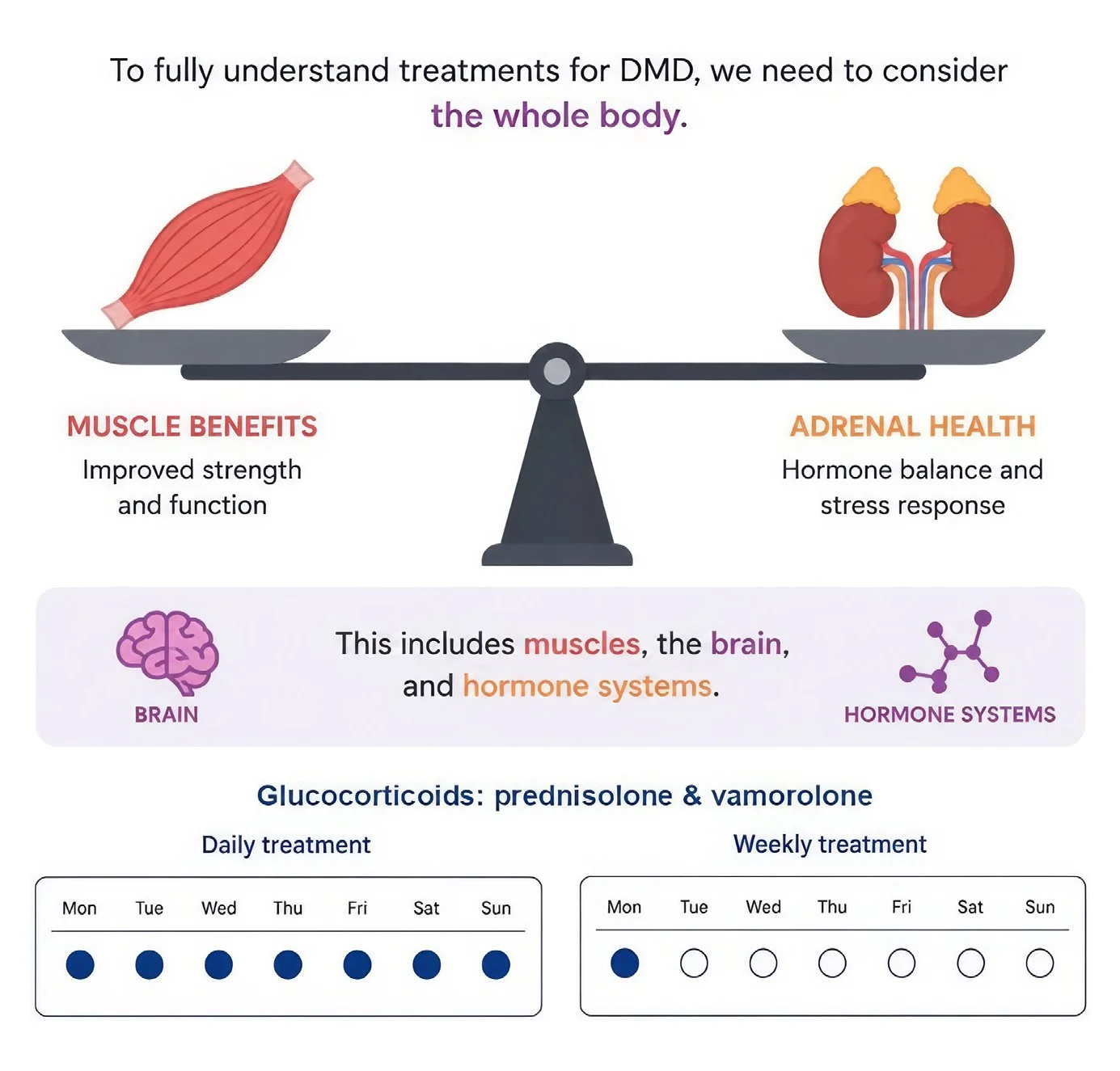
One of the most widely used treatments for DMD is a group of drugs called glucocorticoids. These include medicines such as prednisolone. They can help improve muscle strength and delay disease progression. However, they can also affect other parts of the body, including hormones, growth, and mood.
In this study, we wanted to better understand how different glucocorticoid treatments affect the body. We focused on two key questions. First, does the type of drug matter? Second, does the dosing schedule matter?
To answer this, we used a well-established vertebrate model of DMD, which shows many similar muscle and brain problems as people with the condition.
We compared two drugs: prednisolone (a standard treatment) and vamorolone (a newer drug designed to have fewer side effects). We also tested two dosing schedules: daily dosing and weekly dosing. The treatments lasted for six weeks.
We then looked at several outcomes across the whole body. These included muscle strength, markers of muscle damage in the blood, brain-related behaviours (such as stress and anxiety), and the structure of the adrenal glands, which control hormone production.
We found that the effects of treatment depended strongly on both the drug and the dosing schedule.
Weekly treatment with vamorolone improved muscle strength, while daily prednisolone reduced signs of muscle damage in the blood but did not clearly improve muscle function.